University of Computer Studies, Yangon (UCSY) Logo
×
ResetSpace Logo
Welcome · UCSY · Semester 9 · IS-111

Software Project Management
of the ResetSpace Platform

Chapter 1 · 1.1 Project description

One platform connects the complete service journey

  • Discover courses, events, coaches, therapists, and organizations
  • Purchase learning content and book professional services
  • Manage meetings, payments, wallets, and invoices
  • Communicate through messages, notifications, reviews, and surveys
ResetSpace system architecture
Next.js frontend + Laravel API and administration
1.1.2 Main functions · 1.1.3 Stakeholders

The platform serves six connected stakeholder groups

Users and clientsDiscover, purchase, book, communicate, and review
Service providersPublish content, schedules, meetings, and services
OrganizationsManage members, services, and business information
AdministratorsControl users, content, payments, roles, and settings
Development teamBuild, test, deploy, and maintain the system
Project supervisorReview progress and evaluate the project
1.2 Project objectives · 1.3 Project scope

Clear boundaries kept a large scope manageable

AccessAuthentication and roles
MarketplaceCourses, events, services
TransactionsBooking and finance
EngagementMessaging and feedback
OperationsIntegrations and deployment

Outside scope: native mobile apps, medical diagnosis, custom banking, and custom video-conferencing infrastructure.

Chapter 2 · 2.1 Problem statement

Fragmented tools created avoidable service and management problems

Separate service discoveryOne searchable marketplace
Manual booking and communicationConnected schedules, messages, and meetings
Manual financial administrationCentral payments, wallets, commissions, and invoices
2.2 Project constraints

Four constraints shaped every planning decision

23 Jan

Delivery

Prioritize the core release.

5

People

Work in parallel and share knowledge.

200 lakh

Budget

Use open-source tools and reused services.

13 weeks

Time

Manage dependencies and contingency.

2.3.1 Functional · 2.3.2 Non-functional requirements

Features and quality requirements were planned together

What the platform must do

  • Accounts, profiles, and access control
  • Courses, events, services, and booking
  • Payments and financial management
  • Communication, integration, and administration

How it must operate

  • Secure and private
  • Reliable and accurate
  • Responsive and usable
  • Maintainable and deployable
  • Performant and scalable
2.3.3 Software · 2.3.4 Hardware requirements

The technology and hardware baseline supported both applications

Software

  • PHP 8.2+, Laravel 12, and MySQL 8
  • Next.js 15, React 19, and TypeScript
  • Redis or Valkey, Docker, Composer, and Node.js
  • Pest, Pint, PHPStan, ESLint, and Prettier
  • GitHub Actions, Linux VPS, Nginx, and Cloudflare

Hardware

  • Development computer with at least 8 GB RAM
  • Storage for code, containers, dependencies, and data
  • Stable internet connection
  • Linux server or cloud VPS
  • Server capacity and backup storage
2.4 Project organization and people management

Responsibilities matched the team’s main skills

  • Hein · Leadership and integration
  • Htet · Backend and database
  • Pyae · Frontend and API integration
  • Lynn · Quality and documentation
  • Kyaw · UI/UX and project support
Academic simulation of team responsibilities.
ResetSpace simulated team organization
2.5 Software cost estimation

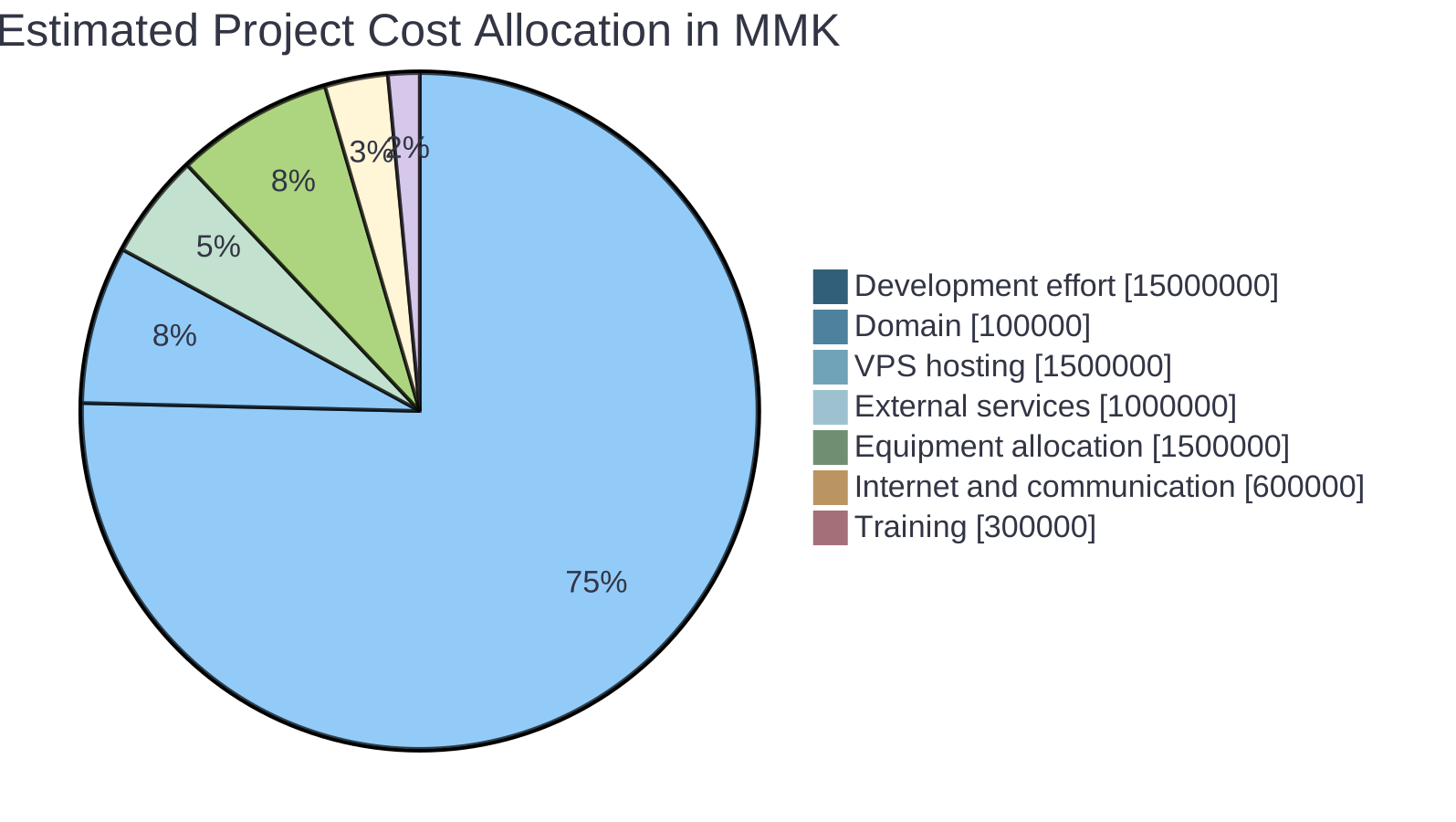
The 200-lakh budget prioritized development effort

Approved ceiling
20.00M MMK
Simulated expenditure
19.035M MMK
Remaining allowance
0.965M MMK
Planned development effort
15.00M MMK
Planning estimates, not verified financial records.
Estimated project cost allocation
2.6 Risk-management plan

Every high-priority risk had a practical response

Changing requirementsAssess impact and reprioritize
Member unavailableShare documentation and review code
Financial errorValidate, test, review, and audit
Integration failureUse development credentials and tests
Private-data exposureEnforce authorization and secure configuration
Schedule pressureRe-estimate and reduce lower-priority scope
2.7 Quality-management plan

Quality checks accompanied development

41backend PHP feature-test files
  • Pull-request review before integration
  • Formatting, linting, type checks, audit, and builds
  • Development deployment from develop
  • Production deployment from main

Known limitation: frontend automated tests were not implemented.

2.8 Configuration-management plan

Every change remained traceable from issue to release

  • Issues record requirements and defects
  • Feature branches isolate work
  • Pull requests support review
  • CI checks work before integration
  • develop and main separate environments
Build and release workflow
2.9 Initial process-improvement plan

Goal–Question–Metric connected improvement to evidence

  1. GoalReduce escaped defectsDefects per release
  2. GoalImprove delivery speedIssue cycle time
  3. GoalImprove integration qualityFirst-pass CI rate
  4. GoalImprove review speedMedian review time
  5. GoalImprove frontend reliabilityAutomated critical-flow tests
Chapter 3 · 3.1 Work Breakdown Structure

The WBS turned scope into measurable deliverables

  1. 01PlanRequirements and setup
  2. 02Build foundationsArchitecture, database, authentication, UI
  3. 03Implement coreMarketplace, services, and booking
  4. 04Connect systemsFinance, communication, integrations
  5. 05VerifyTesting, security review, correction
  6. 06ReleaseDeployment, acceptance, submission
3.2 Activity network

Dependencies revealed the 13-week critical path

ResetSpace activity dependency network
A → B/C → D → F → I → J → K → L
3.3 Activity bar chart

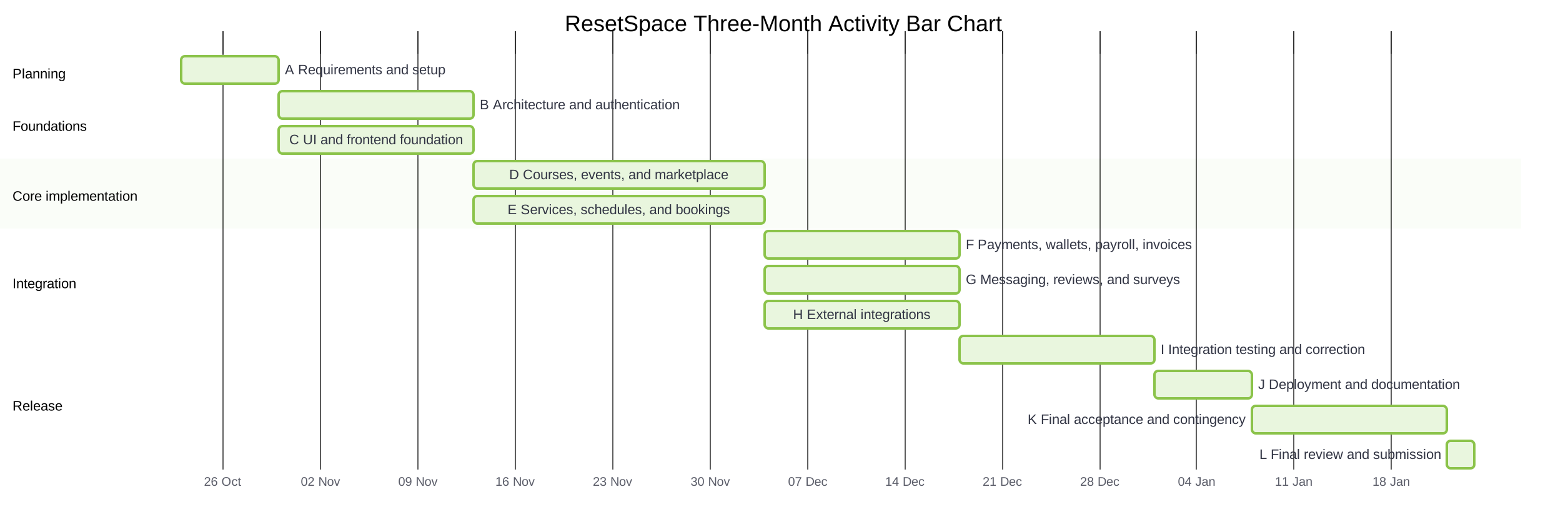
Parallel work protected time for final acceptance

Three-month project activity bar chart
3.4 Staff allocation versus time

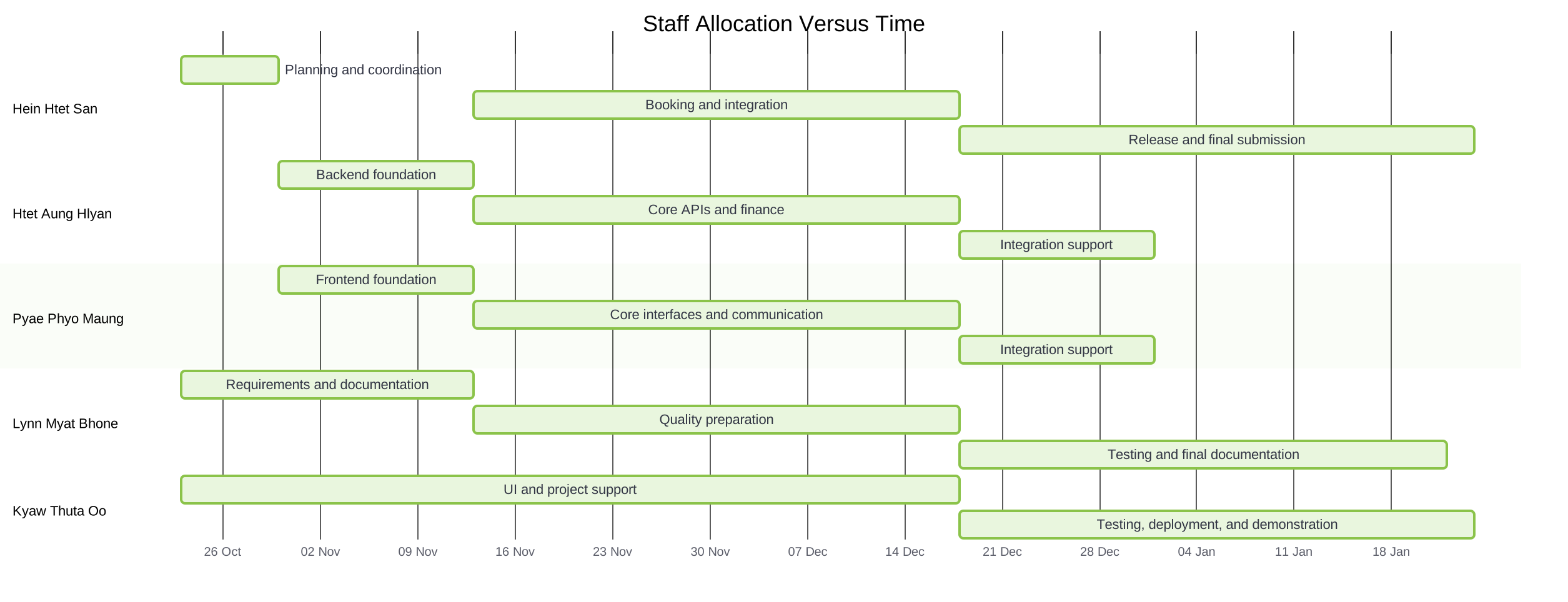
Workload changed as the project moved toward release

Staff allocation across the project period
3.5 Milestones · 3.6 Monitoring and control

Nine milestones made progress visible and correctable

M1–M2 · FoundationSetup and authentication by 12 Nov
M3–M4 · CoreMarketplace and booking by 3 Dec
M5–M6 · IntegrationFinance and integrations by 31 Dec
M7 · DeploymentSystem and draft documents by 7 Jan
M8 · AcceptanceCritical defects resolved by 21 Jan
M9 · SubmissionBook and demonstration on 23 Jan

Evidence: issues, pull requests, commits, CI results, demonstrations, bug reports, and progress reviews.

3.7 Quality · 3.8 Configuration and release execution

Planned controls were applied during development

  • Formatting, linting, tests, audit, and builds
  • Pull-request review before integration
  • Feature and fix branches isolate work
  • develop supports integration verification
  • main represents production-ready code
Build and release workflow
3.9 Process improvement · 3.10 Problems and solutions

Real problems produced specific improvements

OAuth callback mismatchEnvironment-specific callback checklist
Booking and meeting-link mismatchEnd-to-end state validation
Deployment build failureRun CI-equivalent checks locally
Add frontend testsRecord actual effortUse PR checklistsTag releases
Chapter 4 · Conclusion

Project management connected every part of delivery

PeopleScopeTimeCostResetSpaceQualityRiskConfiguration

Clear scope, shared responsibility, dependency-aware scheduling, and continuous quality control made the three-month plan achievable.

End of presentation

Thank you

Questions and discussion

Hein Htet SanHtet Aung HlyanPyae Phyo MaungLynn Myat BhoneKyaw Thuta Oo
Diagram explorer 100%

Scroll to zoom · drag to move · double-click to reset · Esc to close

00:00
Hein Htet San 1 / 23